Blog

  • Same Thailand, new stops, beautiful friendships, and gratitude for it all

    Same Thailand, new stops, beautiful friendships, and gratitude for it all

    [JUST SO YOU KNOW, this is not a normal butterfly story. It is 7 am and I just feel like lazy writing. ]

    When I left Bangkok in 2012, I was not really ready to leave. I just loved living there so much. The simplicity of things, my yoga beginnings, Buddhism, the Thai culture, close friends, the food and the travel opportunities, made me want to make it my permanent home. Looking back, I am so thankful I did indeed leave, for meeting Rob again and many other beautiful parts of my life awaited; but at the time, leaving was really difficult, because I could have also easily stayed. It is funny how when you look back on your life, you can clearly see the energetic forces that were pulling you a certain way. Of course, I would leave. And when I returned, I got to bring my other half with me. Rob too, was supremely excited about Thailand. Thailand was already very special for us both, because when I was living there in 2012, is when we began our very long distance, growing relationship. Messages, calls, random texts, all hints of my future that awaited back in Europe. In any event, excitement filled the air, as we departed from Nepal and headed in a rickety Nepali plane with bad ratings towards Bangkok.

    After our short, somewhat nerve racking flight, we arrived fresh and ready to enjoy some good times with great friends. Three of my dear buddies were still living in BKK and two of our Dutch friends were headed to join us, just a week after our arrival. Good times were surely to come.

    We spent the first week of our three weeks in Thailand, in Bangkok, staying with our friends Dawn and Donovan in the expat part of BKK in their “freaking cool” apartment. It was really great because they live in the same area as I use to during my 2012 stint. So, I got to enjoy revisiting all of my old stomping ground spots with Rob. THIS, I really loved, because visiting local markets and nomming on Thai food is by far two of my most favorite lazy activities. And since Rob loves food and was working out like a maniac, my favorite past times seemed like good choices to him too! Plus, these activities pair well with a large Chang beer, and being we just hiked to EBC, we felt we deserved it. 🙂 So after a few day beers, we would head back to meet Dawn and Donovan. Being the incredibly awesome friends they are, they then took us to many of their favorite spots, mixing in some of the “you just have to do it, since you are here- places”. It was all a blast, and the fact that the fit us in with their busy work schedules, meant a hell of a lot! My best friend from Geneva, who also stayed in Bangkok, also trekked out to downtown BKK to visit me and meet my awesome husband. We have damn good friends.

    After all the traveling we had done, we mostly enjoyed the fact that we were in a HOME again. Dawn and Donovan have a killer set-up and let us really just relax in their home, making us feel at home ourselves (since we didn’t have one), which was amazing for us! Dawn has been a best friend of mine for a very long time, but this time around we got to make a couple friend with Dawn and Donovan. Between the four of us, there is never a dull moment. That is for sure!

    After week one, our friends Jenny and Rein flew over to Thailand from Eindhoven for their three week summer holiday. We began our adventure with them with on a bike tour around the outlying city limit of BKK with Recreational Bangkok Biking. It was a really great time! Firstly because we had the most awkward tour guide ever, who didn’t even know how to change a flat, and secondly because it was my first time to really get to hang out with the two of them! Wandering through some of the slum areas of Bangkok and then through the “Green Lung”, we all got to chat and yeah just begin a whole new couple friendship! And thanks Recreational Bangkok Biking, it really was an awesome tour!

    A few days later, we rejoined down in the Gulf of Thailand in Koh Tao. Together, we spent beach days full of laughter, fun, and Chang. Thailand always captures me in a way that is hard to explain. Her beauty is undeniable, but there is also something in her secrets that keeps me waiting to return.
  • Keepings of Kathmandu

    Keepings of Kathmandu

    Like most capital cities of developing countries, Kathmandu is an incredibly interesting mess. A boggled and miscalculated Gordian knot, that offers the enchanted tourist both confusion and an uncommon opportunity to live weeks in a spiritual hazy dream. A city of interesting dichotomies, Kathmandu relishes between slow OMs and fast paced sellers, new Indie upscale restaurants versus Dal Baht street corners, mystical ancient history facing today’s development race. You can literally feel the tug of war between the city’s desire to follow the lead of its Indian Neighbor versus its plain need to stay true to its elemental roots. Kathmandu is today, as it has always been, an alluring crossroad. The city was so full, so fascinating, that Rob and I found ourselves spending our extra 5 days in Nepal, after EBC, in Kathmandu vs making the trip to Pokhara. Every day we found something new, something beautiful about the city and her outlying villages.

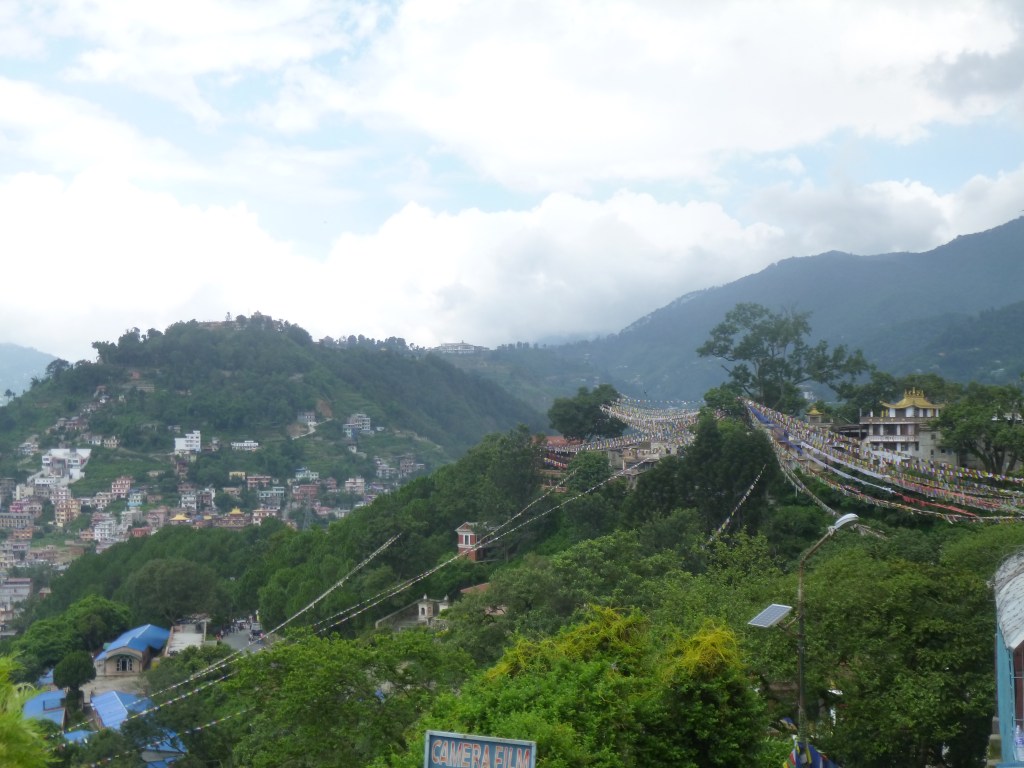
    On our last day in Nepal, we spent the afternoon at the sacred Swayambhunath Temple, west of Kathmandu city. For Buddhists of all sects, the Swayambhunath temple is holds high significance and is either the most important or second most important pilgrimage site, so we simply had to go! The temple sits very high on a hill, with steps ascending to the eyes of Buddha looking over the entirety of Kathmandu and her people. Whether it is because of the climb, the stunning views, the smell of incense or the energy of our earth that surrounds this stupa, it is difficult to leave. It is completely magnetic. In the end, it was the notorious monkeys of the Swayambhunath temple (AKA Monkey Temple) that sent us scurrying down. We had already been through one round of traveling rabies shots, and I was not eager to have to commence another cycle. And so, as evening came around, we rode our moped back through the busy wet streets, with echoes of OMs and motors, and eventually settled in a nest like restaurant with vegetarian burgers and sweet rum. Nepal, a piece of your magic is kept in our heart.

  • Day 10: Soaring on life at Everest Base Camp

    Day 10: Soaring on life at Everest Base Camp

    The day that we had been working towards had finally arrived. Excitement filled the air. A 7 am wake up call, a quick breakfast of oats and …who the hell cares… “We are about to trek to our final UPWARD destination- Everest Base Camp! With a deep inhalation of brisk Himilayan air, we set foot outside the tea house at Gorak Shep. Even the smallest of noises are crushingly clear at 16,942 feet. Shrills of chisels against rock, think tink tink, as 15 men build new rock dwellings at a painstaking rate, tink tink tink. The sips and slurps of tea drinkers. The crunch of our feet over rock and snow, the slide of small pebbles as we push them behind. The whistle of the wind over the dreamy peaks that surround the desolate roof of Gorak Shep. The sounds of Everest are a beautiful symphony. And when you add such music behind a sense of impending accomplishment, your whole body beams with light. Atleast, that is how it was for me as we set off for the last ascent.

    From what we have heard, most people who trek to EBC experience crowded trails and muddled views. For us, the moment we arrived to base camp was anything but crowded. Anything but muddled. We were honestly THE ONLY PEOPLE THERE. The time we spent in silence and in awe is unforgettable. We felt proud. We felt as one. One with each other and every atom of our incredible universe. Thinking of all the trails we had traveled, all the blisters and pains the trails gave, the scent of pine and glacier water, all the kind souls we had met and the stunning beauty of mother nature that encompassed us. It was truly hypnagogic. As we stared into the eyes of Everest, trying to grab a hold of the beauty of this moment, placing it in our memory, we heard her roar. The end to Everest’s private symphony.  Luckily it was only a warning roar. As Everest raised her voice and sent an avalanche down, we stood in caution, suddenly becoming even more aware that with beauty sometimes lies danger, for large boulders the size of small cars and SUVs lied behind us. Fortunate for us, Everest’s movements were only strong enough to spew snow. So, no boulders came our way. But, moving quietly, we could feel the deepening of surface cracks over the glacier we were standing on. I felt quite timid to be honest. Questioning which way to move: forward on into Base Camp or retracting a bit to look over Base Camp. An impossible decision, which Rob made for us. Forward of course. Despite the danger that lurked with every footstep. And then a second avalanche came down. Now, we not only heard, but listened to Mother Nature’s message. Once we were in a safe zone again, I realized I had not been breathing for a while down there. But now, we were all three safe, and for that, I felt grateful. Grateful for safety in the moment, for the incredible life I have lived thus far, the man I love standing next to me, for kind souls in the world such as our guide Rakesh and our porter Saroj, for my family, for my friends, for the earth which provides us life and for the universe- which reminds us that we are all ONE.

    Before heading back to Gorak Shep, we took the picture you see above. We made it. All, 17,598 ft. Life is a beautiful adventure.

  • Day 9: Lobuche to Gorak Shep

    Day 9: Lobuche to Gorak Shep

    Out of all the tea houses we stayed in, I hate to say it, but I think the one in Lobuche was my least favorite. The set-up was just odd. There were about 8 or so rooms on one cement hall, interconnected by a cemented bathroom to another cement hall with its own 8 rooms. It was all pink dark cement. Odd. To add, everything was wet and dingy. It was off-season, we get it. Anyways, when 6:30 wake up call came, I was ready to throw on my clothes and hit the trail. Before doing the grudge work of getting out of my sleeping bag, and packing everything up, I took a peek out the window of our small room. I could see that the clouds wanted to take a gander at what the ground felt like. Heavy rain swells lied within them, and it was almost certain to me that our morning hike would be a wet one. Rob took a look as well. In agreement, we slid on an external rain tight layer that we bought for under 30 Euros in Kathmandu. Apparently Northface. In a jiffy, we were headed to the breakfast table for, who would have guessed it, porridge and oats. Sustenance is sustenance eh?

    Roughly around 7:30, we walked out into the wet cloth of outside and headed for Gorak Shep. The air was really wet a thick, yet a deep inhale still filled my entirety with fresh mountain air. So entirely invigorating. Within the first 100 meters, we saw a helicopter landing pad made of green grass and yellow flowers and painted rocks which made the H with the circle around it. Being that my Gramma is a helicopter pilot, I automatically thought, how cool would it be for her to fly here right now and see us climbing this trail! Everest, I am sure, is out of the question. My next thought was, I am glad we have not had to fly a helicopter this trip. A helicopter flight would have meant a life threatening situation and at least $5,000. So, yes, glad no helicopters joined our adventure.

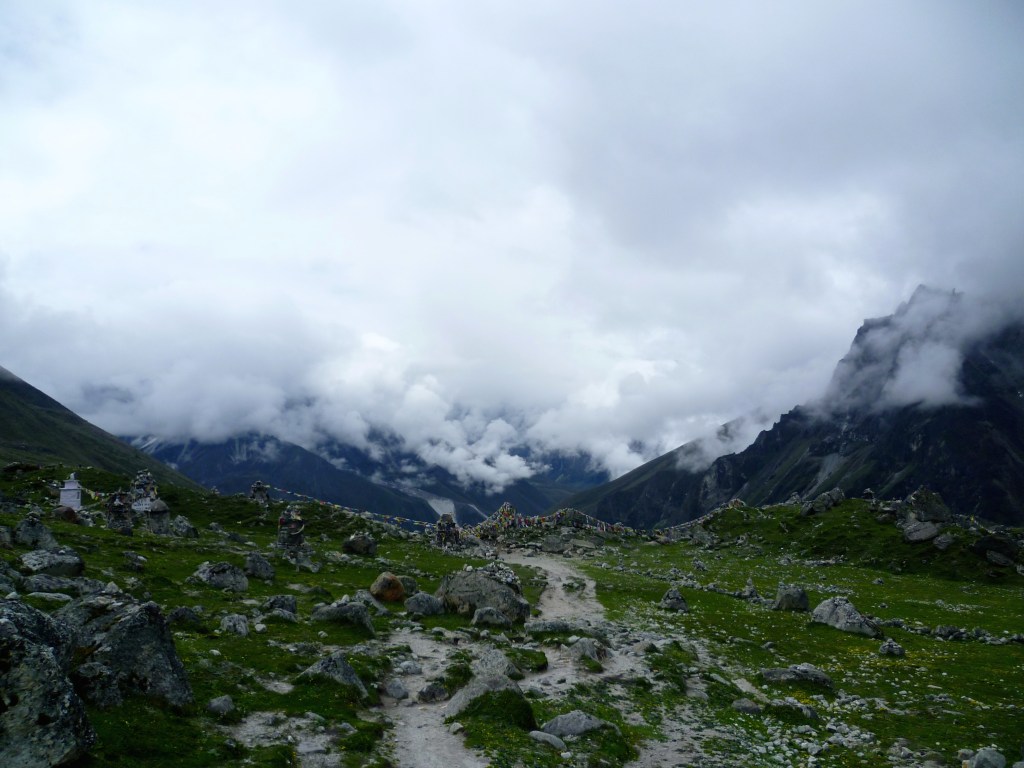
    Gorak Shep lies at 5184m. It was about a 3 hour walk from our tea house in Lobuche. For some reason, I had envisioned that the last stretch to the last tea house would be tough. But, it could quite possibly have been the easiest day, both physically and mentally. The streak from Lobuche to Gorak Shep is just a steady, constant incline. No major changes. Just steadiness. The trail climbs over rivers, valleys and makeshift bridges, but all with rather easy forward footing. Once the rain came, my initial reaction was a bit of dread, but after a couple of minutes and the realization that my rain gear worked, I was so happy it was raining! With strong legs, steady breath and a light heart, we treaded on! Life felt real, gritty and beautiful. And as we mounted the village of Gorak Shep, just a short three hours after departure, a beautiful white horse stood under the day’s last view of Everest. All I could do was smile with my heart.

  • Day 8: Periche to Lobuche

    Day 8: Periche to Lobuche

    After a day and a half of rest and relaxation in the soft valley of Periche, we picked the trail head back up early morning on Day 8. According to estimations, Lobuche our next destination, would take us about 4-5 hours to get to, even though it was only 700m away. The reason for the lengthened time, lied solely in the fact that half of the trail that leads to Lobuche resembles the old Agro Clag from Nikolodeon’s game show GUTS, only it is longer. No kidding. The climb has to be at an 80% grade and took us at least an hour to climb. It was tough. But after the steep climb, a surreal moment awaited. A moment that took our mental breath away.

    At the top of the steep climb lies a small, shallow trough that overlooks the valley of Periche, previews the mist towards Louche and is home to the truthful Everest Memorial. I am not sure if it is official, but in this small glen lies the grave stones of all those who lost the epic battle against mother nature, the gravestones of those who lost the battle of Everest.

    From small piles to big piles of stone, lie the memories of courageous people. People from all over the world. People who had the same dream as many others, but were actually brave and determined enough to seek it, even if it meant their end.

    This was a truly captivating moment. A moment that was very hard to remove myself from. But, our destination was calling us onward. So, we rightly left behind the memory filled stones, keeping the recognition of their bravery with us and headed towards our own kismet.

  • Day 6: Tengbouche to Periche

    Day 6: Tengbouche to Periche

    A rooster? All the way up here? Really? Those were my first thoughts in the morning after a too short of night’s sleep in Tengbouche. Must have been the smell of paint that kept me awake. In any event, I rose out of bed with a smile; to the trail we go. But, first, breakfast. Funny enough, being halfway through our ascent, one of the biggest things I noticed outside of nature, was the teasingly long, but limited menu. During high-season, these trails have full-blown English breakfasts, pancakes, noodles, more Dal Bhat, eggs… everything. But, for us, there was only oatmeal and Dal Bhat; which, by this time was starting to get a bit old. Luckily, I had brought with us some dried fruits to add a little something to the monotony of oats and warm water. And when you spend all day hiking, nourishment is nourishment after all. So with a big swallow, Rob and I took in our oatmeal, drank cozy tea, filled our water bottles with our water/tang mixture and headed out for the 3-4 hour hike to Periche.

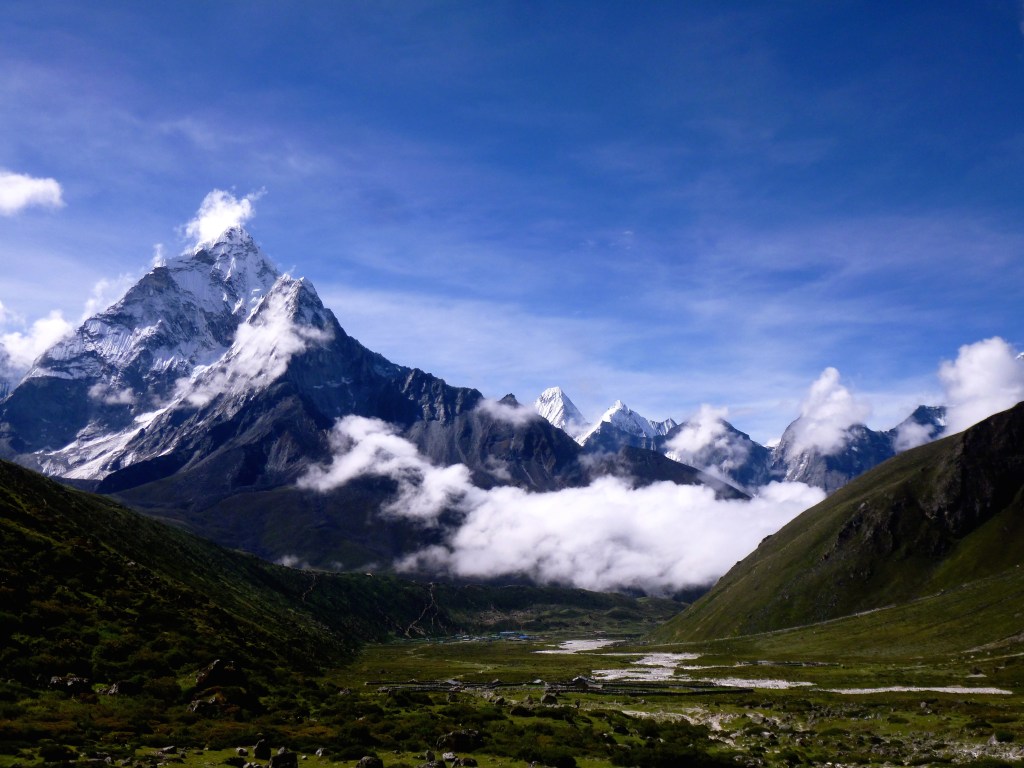
    This part of the hike was really interesting, because our destination- Periche- lies literally in the middle of nowhere. It is nowhere near the larger cities of Lukla (which connect to Kathmandu) nor is it close to the Himalayas notorious climbing peaks. Periche lies somewhere in the middle. To get there from Tengbouche, we began a most immediate descent, which eventually leveled off into a steady incline for a good couple of hours. An absolutely beautiful day was upon us. The sun was shining lightly on our backs, the roar of the Dudh Kosi river within reach, and displays of the beauty of the Himalayas all around us. At one point, we even saw a wild/stray horse perched underneath a view of Ama Dablam. He/she most likely used to be owned by someone, but we could tell from the protrusion of its ribs and wild hair, that it had been a while since a human cared for it. But, more so that it simply looked free, much in the way I imagined ourselves. Free.

    After around a total of 4 hours, we came upon a point where the Dudh Kosi river made a deep twisting bend, which required us to climb a bit higher to make the turn. Once we made the turn, I stood awestruck and agape at the beauty that lied ahead. Before us lied a valley of small flowers, rock homes and a babbling brook that shook hands with the Dudh Kosi, close to its twisting bend. Views from most all of the famous Himalayan peaks can be seen from the point of Periche; you simply just have to catch a moment in time where God opens up the cloudy gates and allows perfection to be seen.

    Being that it was still early in the afternoon upon our arrival, Rob and I made a point to check out the small village of Periche. To our delight, most everything was closed. Somehow, closure of all of the hotels, shops and so forth, had become a comfort. Somewhere along the line, the periodic closure of the few restaurants and hotels made our experience that much more real. More true. Like we were closer to nature because of it. So, we strolled around Periche, watching the quiet nature of the village unfold.

  • Day 5: Namche to Tengbouche

    Day 5: Namche to Tengbouche

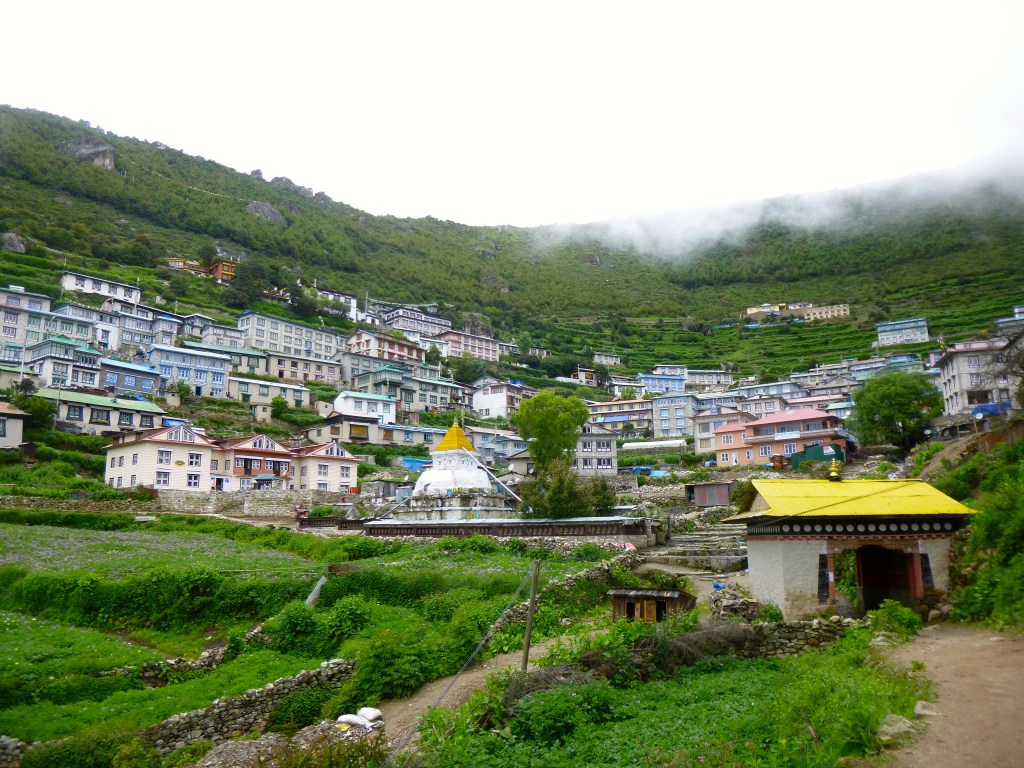
    Perching at a height of 3,867 metres is the incredibly small villiage of Tengbouche (Thyangboche). Tengbouche holds great importance to trekkers, Buddhists and the people of the Himalayas, for it is not only a good place to rest your head, but also is the home to the largest gompa in the Khumbu region, the Tengbouche Monastery. Thinking back, I believe the Tengbouche Monastery is even mentioned in Peter Matthiessen’s 1978 book, The Snow Lepoard. Which, by the way trekkers, is a great book to read in preparation for your trekking adventures in Nepal. It helps you to begin thinking in “butterfly detail”, noticing every light flicker in the forest, the crunch of the rocks under your feet, the sturdy nature of the mountain- it simply helps you to conciously awaken your senses.

    In any event, Tengbouche is about a 5-6 hour hike from Namche. As soon as we left the villiage of Namche, roughly around 8 am, we began a rolling descent/ascent scheme. Rob and I kept saying, it seems so counter intuitive that we just hiked an pretty intense upward climb to get to Namche, only to descend the same distance a day later. But, we were too elated to be back on the trail to whine. After around an hour or so, we found ourselves much closer to the Dudh Kosi river. Then, at some point, Rakesh said that we would now begin the ascent to Tengbouche. He said it would take around 2 hours or so. Give or take. And so we began an endless amount of switch backs.

    I took only about 12 pounds with me in my pack. Mostly carrying water, snacks, extra socks, a small shovel, jackets, lighters, medicines and eco-friendly toilet paper. (Another thing trekkers, if you need to use the restroom, which you will, because you need to stay hydrated during your trek, the most environmentally sustainable way to use the restroom is to find a spot in the woods, dig a little hole, use the restroom, cover your tracks and then burn your toilet paper. True statement.) BUT 12 pounds on these switchbacks was not easy, I won’t lie about it. My shoulders were achy from the weight and my lower back was ill-thrilled from the hunching I was doing. I did bring Tiger Balm from India with me, which saved me during times like these. Just enough relief to get through it. After a seemingly infinte number of switchbacks, we walked through the gates to Tengbouche. Funny enough, after feeling the aches in my shoulders, it was ironic to see a man carrying up a full trunk of a tree on his shoulders, Nepali style, balanced by a head band and rope. I immediantly forgot about my shoulders. P1060443

    Wouldn’t you?

    After standing astounded, with my jaw wide open, Rakesh moved us onward towards our tea house for the night. Mostly all of them were actually closed, but one remained open for the few trekkers who would be on the trails during “off-season”. We were warmly welcomed with the smell of paint (they were also doing some remodeling) and a pot of tea. They asked us if we would like cold bucket shower… and we declined. Wipees would do with the cold temperatures outside. After getting a bit more settled in and ordering what we would like for dinner in the evening, Rob and I went to explore the Tengbouche Monastery. I had been really looking forward to seeing it in full swing, imagining the bells chiming, incense flowing, the harmony of the chanting monks and the sounds of dongs ringing loudly. But, to our disappointment, the monks had left to hold a gathering in a neighboring village and were not present; only a single monk and his two dogs were left to keep the Monastery afloat. Lucky for us, we were allowed inside to take a look around and read the stories on the walls. Escaping a bit into the simplicity of Monastic life. It was absolutly beautiful. Regardless of how empty it was, I could feel the life within the walls, the prayers and truths revealing themselves as I grazed the painted stories with my hands.

    After around thirty minutes inside, we were led out by the guarding monk, and returned back to the tea house for an evening of Dal Bhat, cards and tea.

    Life in the Himalayas is both simple and compounded. Once I released myself from the hectic nature of my mind’s creation, I found peace, and through this peace, my mind found that in the simple things, life is its most full. Like taking in a full breath of air, noticing how it tastes, smells, feels, reenergizes my body; imagining the rush of blood through my veins and the expansion created by the sip of oxygen. And the most wonderous part was to then open my eyes and see the panoramic views of the Himalayas, including the well-known peaks of Lhotse, Ama Dablam, Thamserku, Tawache, Nuptse and Everest.

    I am extremely thankful to be alive.

  • Day 3: Diamox and Namche

    Day 3: Diamox and Namche

    We sauntered lightly over deep trails, trails slicked by mountain dew and sodden green moss; trails that without a doubt hundreds of thousands of villagers and Asian wayfarers have once treaded. In my day dreams, built by the tales of time’s trekkers, story tellers, Kathmandu villagers and today’s bloggers, Namche was a busy trading point, where people from across Asia met to trade a melange of goods. It was supposed to be the gathering point of Tibetan, Indian and Nepalese mountain villagers. A place where most any good could be bought or traded. I imagined it being crazily busy, hazy, similar to the scene set underneath the Boudhanath stupa in Kathmandu. To my surprise, and later delight, Namche was anything but hustling. It was quite quiet actually. Upon arrival, my eyes kept searching for what my imagination believed was the reality of Namche. But, almost every store seemed to be dark, shut, and unwelcoming to the wandering trekker. People were absent. Gone. Our previous destination of Phakding seemed more awake than this sleepy city. But of course, it is “off-season”.

    After around a ten minute walk through the village, seeing only a few children playing in a wet field and one woman fetching water, Rakesh told us to unload our bags. Apparently, we had arrived to our hotel for the next two nights.  Expecting that the tea house owners would come out of the front door of the building our bags set on, I faced against the mountain’s view. Then, I suddenly heard a small, happy voice right behind me. As I turned around, I saw the cutest woman and another shy soul behind her. I am kicking myself for forgetting her name right now, but I remember her name didn’t seem fitting. I remember thinking, no, your name should be “Happy”. Her hello even held a giggle. After a few exchanges in Nepalese with Rakesh, she took us to a room on the bottom floor of the incredibly large building. It seemed strange because upstairs looked much nicer than the room she showed us to. Later, we would learn that being it was off-season, they were in the middle of some remodeling. Happy offered us the only room she felt suitable; two twin beds, a toilet, and enough rain water held in buckets to provide a shower if we wished and enough water to flush down what was necessary. Good is good, we said. So, we settled in, changing clothes, adding more layers on, and waiting for Rakesh to tell us the plans. And what were the plans? Basically, the game plan was to acclimatize. To spend the evening and the full next day getting use to the elevation we were at and the decreased oxygen levels. So, we spent the first evening playing cards, eating spaghetti (that was cooked in a temporary kitchen built for us), and reading. After, setting into our sleeping bags, we drifted off to a soft slumber together. While Rob slept like a bear in hibernation, I woke up in the middle of the night gasping for air.

    Literally, gasping.

    Fear rose inside of me, as I walked to the bathroom, looking for a light. Where is my “Rough Guide: Nepal”? I know they said something about this, I thought. I was panicking. I quickly shut the bathroom door behind me, so that the light would not wake my soundless husband. I sat on the toilet, flipped through my “Rough Guide: Nepal” book and tried to catch my breath. In through my nose, out through my mouth, I kept telling myself. Though this calmed me, I was still short of breath. Finally, I found the page on acclamating to the elevation differences throughout the Himalayas. Words like helicopter, throw-up, diarhreea, expensive, and death POPPED out to me on the page. But, somewhere inside, I was determined not to need DIAMOX. Though almost every former trekker whose blog I read had taken diamox to help them acclimate, I somehow thought I would be different; that my body would adjust to nature’s grip around me. But, as the night grew colder, and my gasps grew louder, I gave in. I took a half a Diamox and stuck out the rest of the night. By morning, I told Rob what happened to me in the middle of the night. He obviously did not have the same experience. But, since I was taking the Diamox now, he would too. Long story short, we acclimated to the elevation of Namche, and with Diamox floating in our systems, the uphill climb we faced in the coming days would be much more oxygenated. Thankfully.

    Lesson learned: Why try to beat the odds when the risk is high? Simply take the dang Diamox and get on with it.

    Lastly trekkers, don’t worry about purchasing diamox or any other medicines in advance. Get them all in Kathmandu. It is both cheaper and easier.

  • Day 2: Phakding to Namche

    Day 2: Phakding to Namche

    The day awaited us. I could feel my bones rise, sparks fire between the neurons in my brain, the hairs on my arms surge, my feet twitching – anticipating the moment they would get to slide into my hiking boots. I was beyond excited. I thought to myself, okay, what all should I wear? It feels quite cold, but today is supposed to be THE toughest part of the hike. So, on went my sports bra, a breathable T-shirt, khaki hiking shorts, my North Face rain jacket, wool socks and my North Face Boots. I swept my hair back, brushed my teeth, and quickly packed my bag, Rob’s bag and Saroj’s bag (for it was our extra stuff he was carrying). Once we were all packed up, we headed down stairs, just before 7:00 am. A full breakfast of oatmeal, tea and more tea, warmed us right up. So, with warm bellies, the four of us set off for Namche. Rakesh, our plugged in and knowledgeable guide from Good Karma Trekking, had warned us a bit ahead of time that Day 2 would be the toughest day. Namche Bazar sits at an elevation of 3,450m or 4,413 feet, which on average should take around 6 hours to get to from Phakding. Pretty much as soon as you walk out of the village of Phakding, you begin a slow ascent. Step by step, as the air got lighter, less dense- so did I. I FELT ALIVE. SO AWARE. SO CONNECTED. My blood pumping through my body, hearing the light thud of my heart, the rushing sounds of the Dudh Kosi River, feeling the cold sweat on my forehead and almost touching the songs of neighboring birds. LIFE WAS ALL AROUND US. WE were part of it. It was an incredible feeling. At around 11, we stopped to take a break and have some lunch. This was our second time to order off of an ‘off-season’ menu, which basically means that almost everything on the menu is not available. In actuality, you can get dumplings, dal baht or soup. We went for Dal Baht. And honestly trekkers, just go with Dal Baht almost every time you eat. You are guaranteed to be filled with enough nutrition to sustain you for the hours of climbing ahead, you most certainly will not get sick from it, and well, it tastes really good! Oh another thing, make sure you packed some kind of water aid. We packed TANG. It can change your normal Puni Pani (water) into something new, and tasty, for any other kind of refreshment on the mountain besides water and tea is expensive! Don’t forget it. You will want something to change the monotony of water on your taste buds. Now, where was I?

    After lunch, we got right back on the trail. We were quick on time, so Rakesh said we did not need to leave right away, but we were eager! So, we did anyways. From Phakding to Lukla, you cross the majority of the cable bridges that suspend high between mountain passes. Feeling our muscles beneath us, we climbed an incredibly long, mostly straight lined ascent. And as we entered through the holy passageway to Namche, slightly out of breath, we smiled from our heart to our lips.

  • Breathing for the second time: Lukla to Phakding

    Breathing for the second time: Lukla to Phakding

    If my first breath was a second after my birth, then my second true breath would have to be the moment we started walking towards our destination- Everest Base Camp. Day one, of eleven days of walking, wiggling my toes, groping trees, asking for Puni Pani, widening my eyes, smelling crisp evergreens, feeling small rocks slide beneath my feet, hearing – literally hearing the wind blow in twisting streams past my ears, and climbing to the steady pat of my heart had begun. I felt so completely alive. Conscious. Aware. Thrilled. And so eager. I could feel my heart smiling. After setting our bags on our backs, Rakesh and our lovely porter Saroj from Good Karma Trekking, led us through the “busy” streets of Lukla towards our next destination: Phakding. From Lukla to Phakding is only about a 3 hour walk; an easy “climb”. But, it seriously might as well have been 24 hours, in so far as in 3 hours, I experienced a days worth of imagery, beauty, enchantings. Within the first five hours, from flight to foot, the EBC trekker is already witnessing waterfalls, donkeys on trails, cows on trails, the refreshing effulgent Dudh Kosi River whipping rapidly through the Himalayan Valleys, and entrancing lower valley life. It is a bit funny, because there is a visible difference between lower valley folk and those in Kathmandu. It is almost tangible. Nothing better or anything, just different. You see this difference in the warmth of their smiles. The lack of city worry. But, beware trekkers: do not let your competitiveness think that you can walk faster than a small Nepali girl carrying fifty pounds of luggage. She might be chatting with her friend behind her, playing music from her small phone, wearing flip-flops and carrying a hell of a lot more weight than you, but, my friend, she is faster. Her feet know these steps like the back of her hand. Wherever she is going, she will most likely get there before you do. Funny enough, she doesn’t notice it. She is just being herself, within herself, completely bare of your path, your plans and your intentions. She will give you a shy smile and be on her way, most likely wishing you a small “go well” in her head. Don’t try to keep up with her, watch her, watch her go forward in lightness and imagine the home she is waiting to find. You may even see her again, for the trails of the Himalayas are forever intertwining with one another, letting some go and pushing others forward, yet always allowing any soul to sit still.

  • Everest Base Camp Trek: “First we fly to Lukla”

    Everest Base Camp Trek: “First we fly to Lukla”

    In hindsight, the first step of our epic EBC trek was probably the most unnerving. Let me first set the scene. While in India, and staying with friends in Ahmedabad, we were surprised to hear that at the age of 14, our friend Kahan, trekked to EBC with his father. While he mentioned some “really?” kinds of things, on the lines of sanitation, water, and intensity, what frightened us the most was what he said of the first step of the EBC trek- The flight to Lukla. Kahan basically stated that if we made it through the flight, the trek to EBC, for us, would be cake. Of course this alarmed us, so we asked why? He said, one: the planes are rickety old things, flying at incredible altitudes in all sorts of weather changes; two: the landing pad is on the side of a mountain and is truly 1,500ft long and only 60ft wide, with a runway that ends in a blank mountain wall and has an uphill gradient of 12 percent.
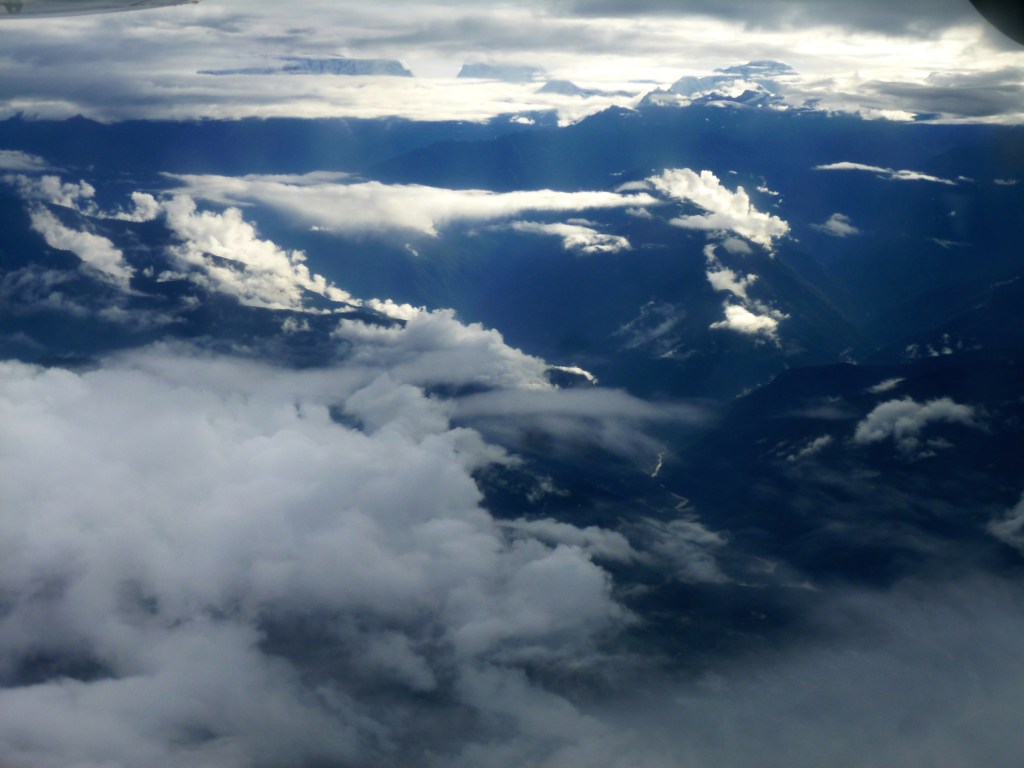
    HOLY COW. (Should I say holy cow in India? Oh well). And the story kept going, I promise. So, now let me tell you ours. After two days wandering around Kathmandu, drinking Everest Beer, preparing for our trek and seeing the sublime earthyness of Nepal’s capital, (which I of course will tell you about at a later date, because it is incredible), we were ready. So, on the morning of July 4th, 2014, we set out for our individual independence, our freedom and our couple and self-exploration. Wake up call was about 4 am, with Rakesh our amazing guide, picking us up at about 5am. Once we arrived at the airport, we could even see HIS nerves about flying. And he has literally made the flight hundreds of times- and still nervous? Now that is frightening. But, okay, I said a little prayer and boarded the 12 person plane. We were given candy to eat and cotton balls for our ears, and told to hold tight. Lift off was forcible and I was not armed. But, once we were in the air, the biggest smile came across my face. I kept telling myself, if we WERE to die on this flight, it was meant to be- so enjoy the beauty. As I looked back at Rakesh and the other Nepali passengers, I don’t think they had quite the same thoughts. But, as the picture shows above, I felt like I was the closest to God I had ever been at that moment. Outside the small plane, was a sea of mountains, light clouds with sunlight simmering through. The ectasy of the moment made me feel light, like cuddling in a bed of covers on a cold winter’s night. Part of this ecatasy was also knowing the next terrifying moment was ahead. So, when the captain said, “preapre for landing, I took a big breath and smiled back at Rob- “here we go”. The landing required so much percision. I mean, I get a bit nerved when a normal plane lands and then is taxiing towards the airport. This time, 1,500 ft away, there is nothing but mountain. You get me? But, we landed safely. And at that same split second, my journey of thankfulness and appreciation for my life and our beautiful world began.

  • The Taj Mahal, Agra, India

    The Taj Mahal, Agra, India

    The funny thing about traveling is, that sometimes, maybe most of the time, it ends up that the destination is not what you remember, but more of the journey getting there. In the case of the Taj Mahal, looking back, I rememeber the long train ride, the taxi, the man getting shaved on the side of the road near a “public toilet”, the women carrying loads of grass on the top of their heads, the cow shit, the camel shit, the horse shit, the loads of people, and the woman who asked for some of our water once we got inside the Taj (which of course we simply gave her the whole bottle, I mean it is water, we all need it). The Taj itself, is indeed beautiful, but the brillant moments on our journey to get there are even more stunning.

  • Pushkar, India

    Pushkar, India

    Sometimes, when I look at the adventures I have been on, the countries I have seen, the landscapes I have walked through, the cultures I have gotten the chance to swirl in, I am simply baffled and cannot help but feel incredibly blessed. Pushkar is a small city in the Indian state of Rajasthan, near India’s border with Pakistan. In some cases, even the most devout of Hindus wait their entire lives to make a pilgrimage to Pushkar, for the fact that it holds one of India’s few temples dedicated to Bramah; yet, miraculously, Rob and I made it there. Of course, when people ask you about India, it seems to be that the terrible instances get highlighted. Most often because people ask, “well, isn’t it dirty?” or “didn’t you get sick?” or “weren’t you uncomfortable as a western woman?” I guess it is also because the wonders of India are so very hard to explain. How can I rightly explain what it is like to watch the sunset over the Holy Lake of Pushkar, a lake infamously created by the tears Sati when her beloved husband Shiva passed away. How can I spell out the echoing song of the holy men, the soft tender cries of elderly beggars, the chatter of gypsy children pleading for a simple chapati, the call of street traders selling their catchpenny items. It seems close to impossible. Also, deeply personal. Somewhere inside, I constantly think to myself, why am I trying to explain the wonderment of India; unless a person is to experience it for themselves, they are never going to truly understand. But, of course I will keep on trying, muffling that small thought every now and again. So, yes, Pushkar is a facinating city; one that was truly worth the trip. Though it is very small in comparison to even Udaipur, a day can easily be filled by walking through the shops, trying to find ways to get around without walking near the entrance of the lake (where Sadhus time and time again ask you to come to the lake for prayer, which costs you-the tourist- as always- a pretty penny), eating vegetarian delights that you had no clue existed, watching the sun set over the lake from the many lakeside rooftops, counting cows, playing cards and drinking chai. Okay, it may not sound so facinating here, but its in these simple acts that you encounter so many things. For example, we wanted to send some dresses home to our nieces, so of course, we went to the post office. Well, what would take fifteen minutes in our western fast world, took half the day in Pushkar. It was actually fun though. We got to go inside the post office, spoke to the local postman who painstakingly took our dresses, wrapped old cloth around them and sewed up the sides for packaging. He spoke of the travelers he has met in his many years living in Pushkar, all while searching through piles and piles for a pen that could actually write on cloth. He was genuine, real and a delight to chat with. There were so many times that a normal task turned into an “experience”. This of course happened everyday on our travels, but in Pushkar there was something in the air that made every encounter heavier, more gritty and forever memorable.

  • Udaipur, India

    Udaipur, India

    Udaipur, India, in the state of Rajasthan. An incredible beauty. From Ahmedabad, we took a RedBus to Udaipur, which was about a 6 hour bus ride. Something like that. Udaipur is more of what I had always imagined India to be, in so far as Architecture and such, with the palaces, small streets, vendors gallore, a dirty lazy river and ghats rolling between where people swam, bathed, gathered for prayer, did the wash and even drank from. We stayed a total of 4 days in Udaipur, all which were filled with new sounds, colors, dirt, warmth, cow poop, trash and happiness. Freedom. Up to this point, I had vehementently refused to rent a scooter while in India. For me, the roads in India are a dangerous place for a foreigner to drive. I mean, Indians clamour about in old caddy cars, horse trailers, tractors, bicycles, elephants, donkeys- not to mention the Holy Cows wandering through the roads- and all without clear rules and regulations. Indians know this to be true, so I promise, I am not slandering here. But, Udaipur is so big, so if we were going to see its true sights, it seemed I needed to give in on the whole “renting a scooter thing”. So I did. Some parts were scary as hell, but we did it. One of the most beautiful sights for me was the Monsoon Palace of Udaipur, formerly known as the Sajjan Garh Palace. The Monsoon Palace was our first destination outside of the city that we wanted to go see, and with our scooter, it was now all possible. The palace itself overlooks Lake Fateh Sagar. It was built in 1884 by Maharana Sajjan Singh of the Mewar Dynasty. The palace itself is not that incredible, but the views you can see from it ARE. It offers a panoramic view of Udaipur and the Aravalli Hills. And by traveling there, you will gain new white and black, long tailed friends- monkeys. I think Macaws.

  • Adalaj Stepwell, Ahmedabad, India

    Adalaj Stepwell, Ahmedabad, India

    The sheer size of the Adalaj Stepwell in Ahmedabad is insane. Built in 1499 A.D. by Queen Rudabai, the Vav (step well) is several stories in depth and was intricately carved to meet its importance. It is a stunning piece of artwork. Upon our arrival to the step, we were a bit taken aback, as the outskirts of it is swarmed with people, indian style. There is a busy market next door, which is not for tourists really, but more for the small village the vav sits next to.

    Before entering the vav, we made a stop at a beautifully maintained temple. Honestly, I am not sure which Hindu god it adorned, but it was vibrant and beautiful. After this short stop, we headed into the well; I found it stunning. Not only the history behind it (as the vav was used on ancient trade routes), but the design of it. I think the picture above captures what I can’t put into words. The designs on its walls and pillars include, leaves, flowers, birds, fish and other ornamental designs. Inside nooks and crannies, you can find both bats and people, both which have come to see this beautiful historical monument.

  • Calangute, Goa, India

    Calangute, Goa, India

    The Indian State of Goa; formerly a Portugese colony, equipped with such past remininces mixed together with all the spice of today’s India. We stayed in the town of Calagunte, famous for its proximity to gold beaches, the Old Portugese Fort and chill hippy feel. We arrived in Calagunte via RedBUS, which took us a total of 20 hours from Bangalore. Upon our arrival, we searched for a cheap taxi to take us into town. After about 20 minutes of bargaining, we were off no better than we started at $8 for a 20 minute cab ride. We stayed in Calagunte for six days, mostly chilling around town, eating wonderful food and taking our mo-ped to all the beaches and small towns in the area, constantly getting caught in torential rain.

    One day, I made an appointment at an Ayruvedic Clinic just outside of town. My appointment was from 11-12, so Rob came back to come pick me up at 12:00 sharp. On his ride to come in get me, the sky was clear, but literally 5 minutes into our ride home, nature starting spilling car-size droplets on our head. We could not see two feet in front of us, so we found a tree to which we thought would provide us with shelter until the rain lightened. But, the tree could not even help. There was nothing to do but laugh, dance in the rain and be so thankful for life. We waitied for around 25 minutes, just talking, shivering, dancing, and laughing (me doing most of that) and then the sun broke free of the rain’s chains and we quickly hopped back on the bike. Shortly after is when I snapped this picture above. I found it beautiful, just like Calagunte.

    The sights of everyday life always brighten my soul and during our time in Calagunte, an “everyday” included Monsoon Season life. With fewer tourists around, life in Calagunte during Monsoon season is slow, lazy and free; women walking in fields after hard rains, men in bars at 10 am sipping on cold beers, couples plowing their field with their faithful ox, children running and splashing in flooded soccer fields. Simple and beautiful.

  • Bangalore, India

    Bangalore, India

    Just a short flight away from Colombo, lies the Silicon Valley city of India: Bangalore. Truly, we did not know what to expect, for the reason for traveling to Bangalore was more that we could hangout for a couple of days with my old roomate and her husband (Priyal and Jamshed). Therefore, Bangalore took us by surprise. It is s seriously cool city.

    Formally known as Bengaluru, Banglore is the capital of the state Karnataka and is the third most populous city in India. Bangalore has a really comfortable climate, sitting at over 900 meters above sea level, and can therefore be enjoyed year-round. Out of all the cities we have visited thus far, we deemed Bangalore as the most livable. As a sprawling metropolis, every corner has something to offer, whether it is an old temple, a historic market, or a new modern cafe (such as The Smoke House or I and Monkey).

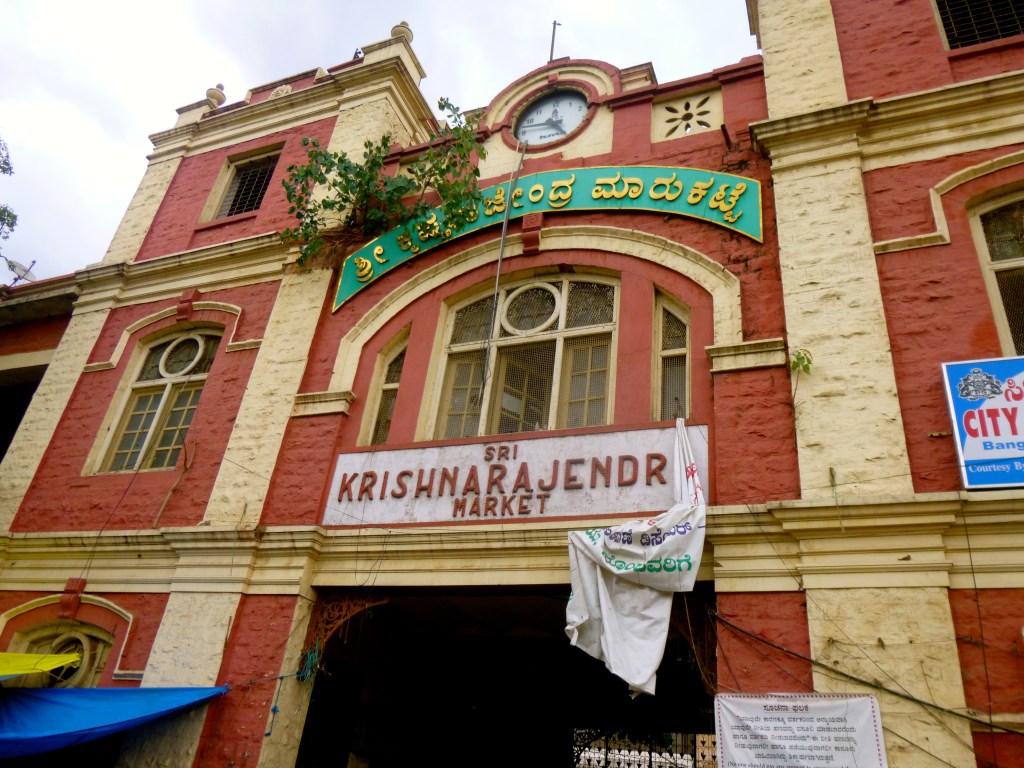
    The photograph taken above is from the front of the Krishnarajendra Market, which really was a whole city in itself. Every walk of life meets here to get their goods: clothing, food, utensils, spices, toys- just about anything. And as most bazaars, upon entry, you feel as if you are walking back in time. Thinking to yourself, “wow. this is what a supermarket use to look like.” Furthermore,  I am sure many Westerners would be set-aback by the hygienic state of the market, but that didn’t stop us. In fact, I think it spiked our curiosity even more. Walking between sacred cows and their poop, vegetables, clothes, sewage, monkeys, bare feet and piles of trash, our curiosity was rewarded by the new sights, sounds and smells. Our day was incredible, our stay was perfect and we hope to get back to Bangin in Bangalore some day in the future.:) Thanks again to our dear friends for letting us stay at their home: a home filled with a lot of love, beautiful people and ridiculously good food.

  • Koggala, Sri Lanka

    Koggala, Sri Lanka

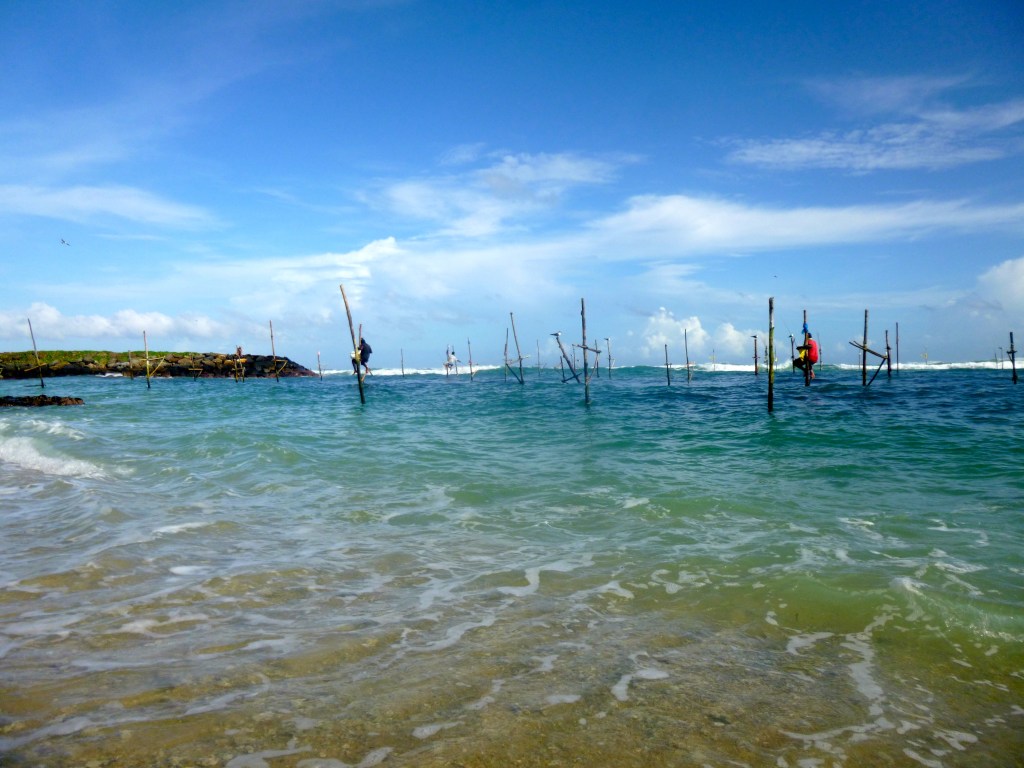
    You know the moment you start planning a trip and you see tons of photos of your destination, and there are around 2 or 3 that you see and then tell yourself, “I have to see that”. Well the photo above, was exactly that for me. For almost a month, I spent my little spare time between work and life, researching what we should see in Sri Lanka; above all, I just had to see for myself Sinhalese men using their ancient fishing technique at the Indian ocean’s shore of Koggala. It was a must. And therefore, one afternoon, towards the end of our tour around Sri Lanka, we rented a scooter and skimmed the shoreline roads between Hikkaduwa and Koggala looking for my fisherman. And at just before sunset, we got to see them sitting on their sturdy sea-faring sticks, dipping their old cane poles and coming out with money in the form of little sardines. At this moment, I felt achievement, happiness, and curiosity for all the other sights we will soon see. It’s these moments that are the reward for pushing boundaries, for being a traveler, for being who I am.

  • A kind soul named John

    A kind soul named John

    In total, we stayed in Sri Lanka for close to a month. Our days were filled with so much natural beauty. Just as important, if not more, we also experienced so much kindness. Though we met so many nice people with friendly faces and hearts along the way, the caretaker of Dinaka Rest in Kataragama, MR. JOHN (the man on the right) was for me the kindest soul I had met in Sri Lanka. On the night of our arrival in Kataragama, traveling and experiencing new food and a new diet got the best of me. For a total of 12 hours, I basically puked my guts up. But, I couldn’t have been in better hands. Not, only did I have my husband by my side, who is always helpful and caring, I also had Mr. John. Being in just s small village, knowing where and what medicines to get was not easy for Rob. And therefore, with a caring hand, John did his best to help me in every which way, from going to get me medicine, to serving simple foods and honestly just being thoughtful. After 2 days of rest, I was finally better. As if he hadn’t already been so kind, John took care of us in so many other ways. John was like our Sinhalese grandfather, offering stories, simplicities, lessons, and standing up for us when our Safari driver did us wrong. He gave us a free night stay, saying we must stay more days since I was sick and did not get to see what we intended; he made delicious meals to both mine and Rob’s needs; he took us to the bus station, making sure we got on the right bus to Unawatuna, and even paid for the tickets. At every chance, we tried to interrupt, saying, “John, please, it’s too much. You don’t need to do that.” But, he was insistent, and all we could do was smile and feel blessed. Though sometimes the language barrier was present, the understanding between the three of us was so dear and something I will never forget. Thank you John and we hope to see you again some day. :)

  • Kandy, Sri Lanka

    Kandy, Sri Lanka

    From Anuradhapura we traveled south to Habarana town (stayed 1 day) and then again south to Kandy. Along this trip, we saw the environment and scenery drift from small hills and jungle to mountainous terrain. Kandy, for us, was absolutely stunning.

    While in Kandy, we imagined that we would have the chance to do some mountain biking, but unfortunately could not find any sources. So, instead, we made day adventures in the city, which definitely worked out in our favor. We stumbled  upon a man who offered us tickets to a Sinhalese Dance performance, land monitors, yummy food and the above cemetery. Offically, it is the British Garrison of Kandy. If you can, please read the BBC article link below. From my side, the cemetary was a treasure and the caretaker, Charles, was an master at story telling, unfolding the dramatic endings of both British men, women and children who made their way to Kandy during the British Colonial Era.

    http://www.bbc.com/news/world-south-asia-14984188